

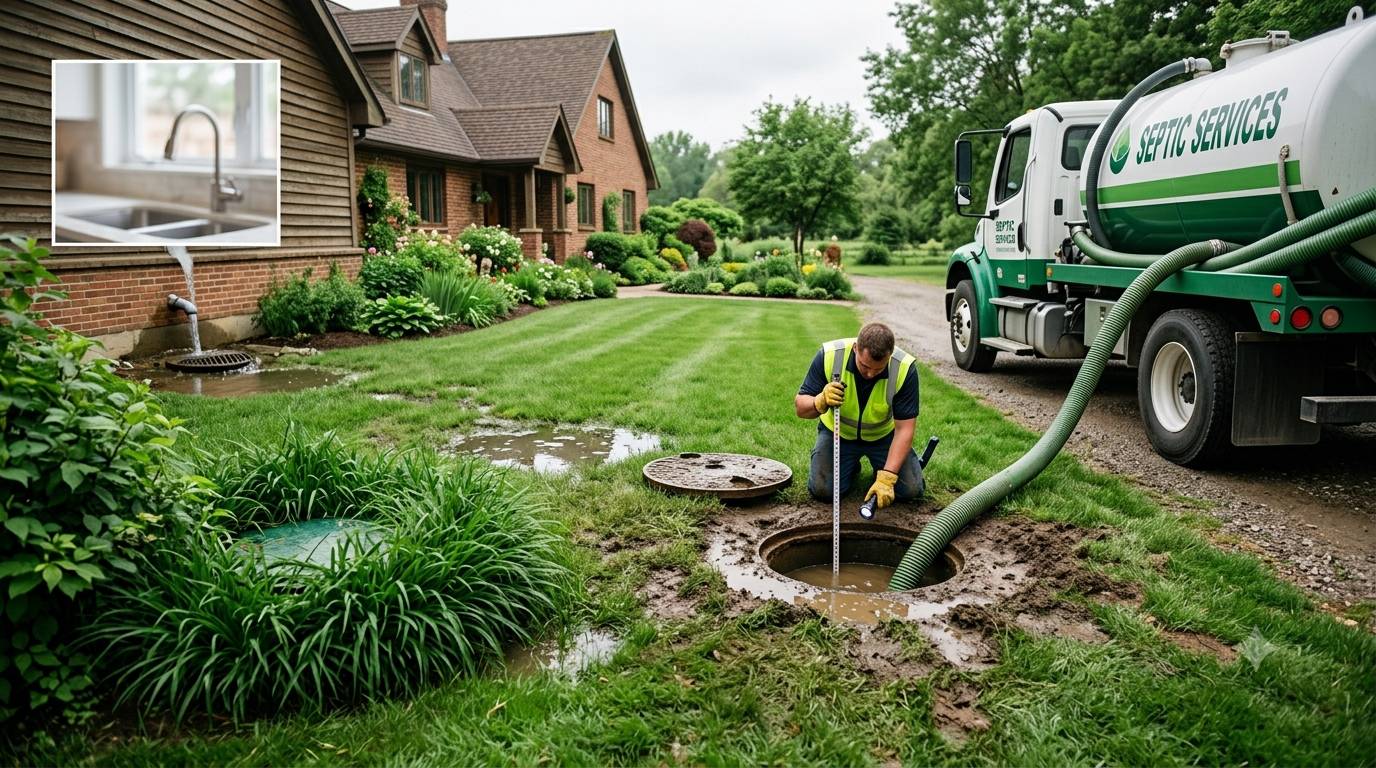
Unlike municipal drainage systems that continuously move wastewater away from your home, an underground septic tank stores and treats everything that goes down your drains. Over time, solid waste builds up at the bottom of the tank, forming a dense sludge layer that eventually requires professional extraction to maintain proper function.
Ignoring routine maintenance can quickly turn a simple household task into an expensive structural emergency. Engaging qualified professionals for regular septic pumping and cleaning services keeps the entire system running smoothly while preventing raw sewage from backing up into your living space or contaminating the surrounding soil.
Early Warning Signs Inside Your Home
Your internal plumbing often provides the first clear indication that the underground tank is reaching its capacity limit. Sluggish drainage across multiple fixtures, unusual gurgling noises in toilet bowls after flushing, and frequent toilet clogs all signal that rising sludge levels are restricting normal wastewater flow.
When the main tank reaches maximum capacity, wastewater follows the path of least resistance back up through the lowest drains in your home, such as shower trays and ground-floor basins. Alongside physical backups, foul smells resembling rotten eggs coming from drain openings strongly suggest that sewer gases are escaping past the water traps due to excessive pressure, making it essential to schedule professional septic pumping and cleaning services promptly.
Signs to Look Out For in Your Garden
The lawn area surrounding your underground tank and drainfield offers critical visual clues regarding the overall health of your disposal system. Unusually lush, bright green patches of grass growing directly above the absorption field indicate that liquid effluent rich in nitrogen is surfacing before proper soil filtration takes place.
Furthermore, soggy patches, standing water, or muddy soil around the tank lid during dry weather indicate that liquid waste can no longer filter down through saturated ground. Removing accumulated solids allows the drainage area to rest and recover its natural absorption capacity.
Why Timely Maintenance Matters
Postponing tank maintenance increases the risk of solid waste escaping into the soil absorption field. Once sludge clogs the surrounding gravel and soil pores, the entire soakaway system can fail, requiring costly excavation and complete reconstruction of your drainage infrastructure.
Beyond expensive structural damage, an overfilled system releases harmful bacteria, nitrates, and pathogens into the immediate environment. This environmental contamination poses serious health risks to household occupants and can potentially pollute local groundwater supplies if left unaddressed.
Recommended Pumping Frequency and Maintenance
Most residential septic systems require thorough extraction every three to five years, depending on household size and water usage habits. Larger families, smaller tank capacities, and the frequent use of garbage disposal units all accelerate sludge accumulation, requiring more frequent professional intervention.
Practising water conservation by spreading out laundry loads throughout the week prevents large volumes of wastewater from overwhelming the system at once. Additionally, disposing of household waste responsibly by never flushing wet wipes, sanitary products, grease, or harsh chemicals down the drain keeps the bacterial balance stable and stops severe pipe blockages.
Protecting Your System for the Long Term
Protecting the surrounding drainfield is equally important for maintaining proper soil filtration over the life of your system. Avoiding the temptation to drive heavy vehicles, park machinery, or build permanent structures over the underground tank and pipework prevents structural crushing and preserves the ground’s natural absorption capacity.
Conclusion
Recognizing early warning signs—such as gurgling pipes, foul odours, and soggy lawn patches—helps you address issues before they cause widespread property damage. Keeping to a consistent maintenance schedule protects your investment, preserves public health, and ensures your domestic drainage system operates reliably for years to come.